

How to Tell If Oud Oil Is Real: GC-MS Testing, CITES Permits and Batch Verification Explained
A clear, step-by-step guide for GCC buyers: why fake and diluted oud oil is common, what home tests can and cannot tell you, how GC-MS lab analysis and CITES permits work, and how to check a batch record before you buy.
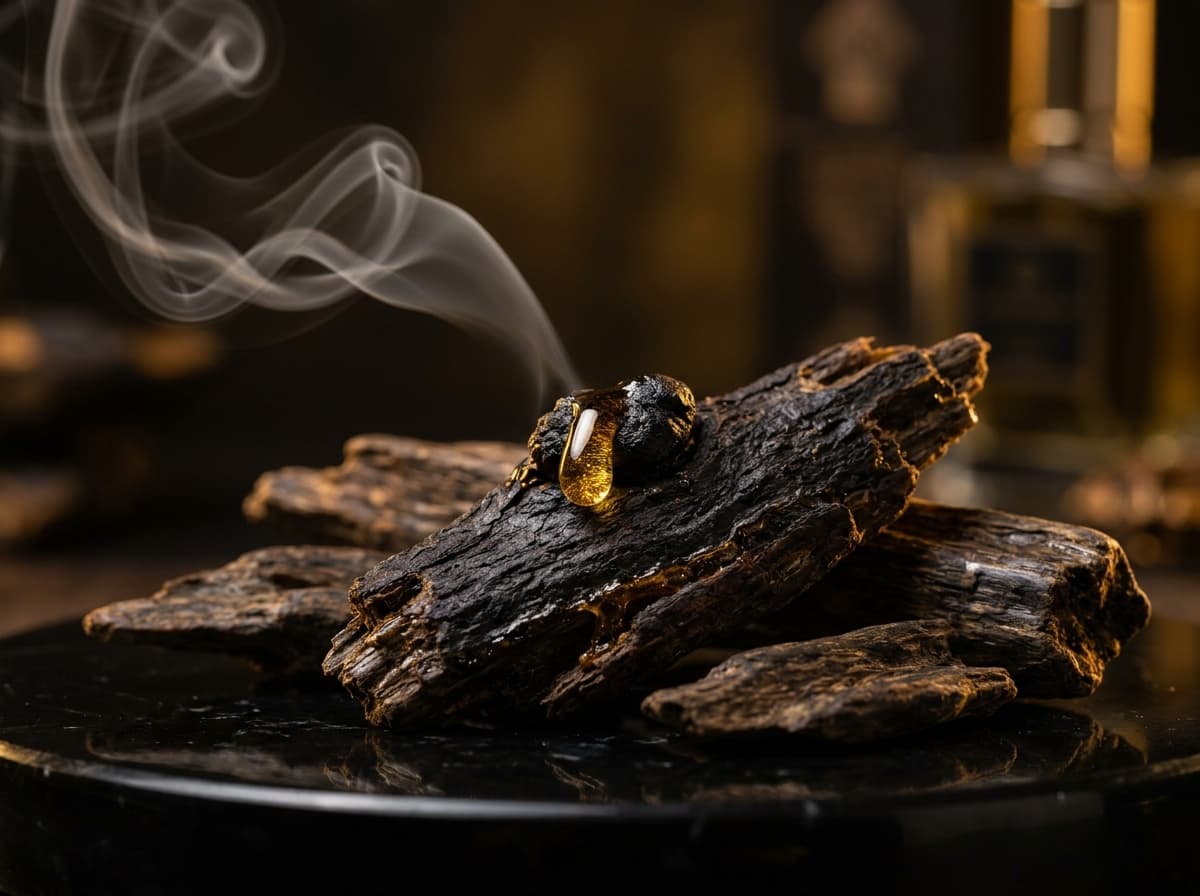
In the Gulf, Dahn Al Oud is more than a fragrance. It is worn for Friday prayers, offered to guests in the majlis, and chosen as the most meaningful gift for weddings and Eid. Because genuine oud oil is rare and expensive, it is also one of the most imitated products in the world of perfumery. This guide explains, from scratch, how to tell real oud oil from fake or diluted oil — and what proof a serious oud house should be able to show you.
Why fake and diluted oud oil is so common
Real Dahn Al Oud is distilled from agarwood: the dark, resin-filled heartwood that forms inside Aquilaria and Gyrinops trees, usually after the tree has been wounded and infected over many years. Only a small share of trees produce good resin, and distilling it yields very little oil. A single tola (about 12 ml) can require a large quantity of wood.
That scarcity creates a strong temptation. A seller can stretch a small amount of real oil — or replace it entirely — and the average buyer will not notice at first sniff. The price of genuine oud is the very reason imitations are profitable.
The most common ways oud oil is adulterated
- Carrier oils: odourless vegetable or mineral oils mixed in to increase volume. The oil smells weaker and feels greasy on the skin.
- Solvents: colourless liquids such as dipropylene glycol (DPG) or diethyl phthalate (DEP) that dilute the oil while staying almost invisible to the nose.
- Synthetic "oud" aroma chemicals: laboratory-made molecules that imitate the smoky, woody character of oud. They can smell convincing for a few minutes but lack the depth and evolution of the real thing.
- Blending cheaper oils: mixing a small amount of high-grade oud with lower-grade oud or other essential oils, then selling the blend as single-origin.
Not every blend is a fraud. Mukhallat (blended perfume oils) are a respected Gulf tradition. The problem is only when a blend or a diluted oil is sold as pure, single-origin oud.
Home tests: useful clues, but not proof
Experienced buyers use a few simple checks. They are worth knowing — but none of them can prove purity on its own.
- The skin test: apply a small drop to your wrist. Pure oud oil usually absorbs into the skin; heavy carrier oils tend to stay greasy.
- The time test: real oud evolves over many hours — the opening, the heart and the base smell different. Many synthetics smell the same from start to finish and fade flat.
- The paper test: a drop on plain paper can reveal oily rings from carrier oils, although some genuine oils also leave a mark.
- The price test: if a "pure, aged, single-origin" oud costs far less than the market price for that grade, ask why.
Skilled adulteration can pass all four tests. That is why laboratory analysis matters.
What is GC-MS, and why is it the gold standard?
GC-MS stands for Gas Chromatography–Mass Spectrometry. It is the standard laboratory method used to analyse essential oils and perfumes.
- Gas chromatography separates the oil into its individual chemical components.
- Mass spectrometry identifies each component by its molecular fingerprint.
The result is a chromatogram — a chart of peaks, where each peak is a compound — and a list of the compounds found.
Genuine agarwood oil contains characteristic natural compounds, especially sesquiterpenes (for example agarospirol, jinkoh-eremol and agarofurans) and 2-(2-phenylethyl)chromones. Adulteration leaves its own traces: solvents such as DPG or DEP, unusually dominant single synthetic molecules, or compounds that belong to other oils.
GC-MS is powerful, but it is important to read it correctly:
- A report is only meaningful for the batch that was tested. It must be linked to a specific batch code.
- It should come from an independent laboratory, not from the seller's own description.
- "Purity" is an interpretation of the results, not a single universal number. A good report lists the main compounds so experts can judge for themselves.
Why CITES matters for oud
Agarwood trees in natural forests have been heavily over-harvested. To protect them, the Aquilaria and Gyrinops species are listed in Appendix II of CITES — the Convention on International Trade in Endangered Species of Wild Fauna and Flora.
Appendix II does not ban trade. It means agarwood and its oil can be traded internationally only with the correct export permits, which confirm that the material was obtained legally and that its export does not threaten the species' survival.
For a buyer, a CITES permit number answers a different question than GC-MS:
- GC-MS asks: is this oil what it claims to be?
- CITES asks: was it sourced and traded legally and sustainably?
A trustworthy oud house should be able to answer both.
What a trustworthy batch record should contain
A batch record connects the oil in your flacon to the evidence behind it. At minimum, look for:
- Batch code — printed on the flacon or its packaging.
- Botanical species and origin — for example Gyrinops walla from Sri Lanka.
- Distillation details — method and year of distillation.
- Lab analysis — GC-MS results with the main compounds identified.
- Legal sourcing — the CITES permit reference where applicable.
- Batch size — how many flacons the batch produced, which tells you how rare it really is.
How to verify a SADNĀR flacon in the Authenticity Vault
The SADNĀR Authenticity Vault is a public lookup that shows the record behind each batch.
- Find the batch code on your flacon or its box.
- Open the Authenticity Vault and enter the code.
- Review the record: species and origin, distillation method and year, distiller, number of flacons produced, the GC-MS purity score and main compounds, and the CITES permit reference.
- If a code does not return a record, contact our concierge before you trust the bottle.
A simple checklist before you buy oud oil in the GCC
- Does the seller name the species and origin, not just "oud"?
- Is there a batch code on the bottle?
- Can you see an independent GC-MS report for that batch?
- Is there a CITES permit reference for exported agarwood?
- Is the price realistic for the grade being claimed?
- Does the oil evolve on the skin over several hours?
If the answer to most of these is "no", the oil may still be pleasant — but you are buying on trust alone. Real oud deserves proof.
Frequently Asked Questions
Can you tell if oud oil is real just by smelling it?
Experienced noses can notice warning signs — a flat, unchanging scent, a harsh synthetic edge, or a greasy feel — but skilled adulteration can fool even experts. Smell is a clue; an independent GC-MS report tied to the batch is proof.
What does a GC-MS test show for oud oil?
It separates the oil into its individual compounds and identifies them. Genuine agarwood oil shows characteristic natural compounds such as agarospirol and agarofurans, while adulterated oil can show solvents like DPG or DEP, carrier oils or synthetic aroma chemicals.
Does GC-MS prove that oud oil is 100% pure?
GC-MS is the strongest evidence available, but purity is an interpretation of the results. A trustworthy report comes from an independent laboratory, is linked to the specific batch you buy, and lists the main compounds found.
Why does oud need a CITES permit?
Agarwood species (Aquilaria and Gyrinops) are listed in CITES Appendix II because trees in natural forests have been over-harvested. International trade is allowed only with export permits confirming legal and sustainable sourcing.
How do I check the batch of a SADNĀR oud?
Enter the batch code printed on your flacon or box in the SADNĀR Authenticity Vault. The record shows the species and origin, distillation details, number of flacons produced, the GC-MS results and the CITES permit reference.